
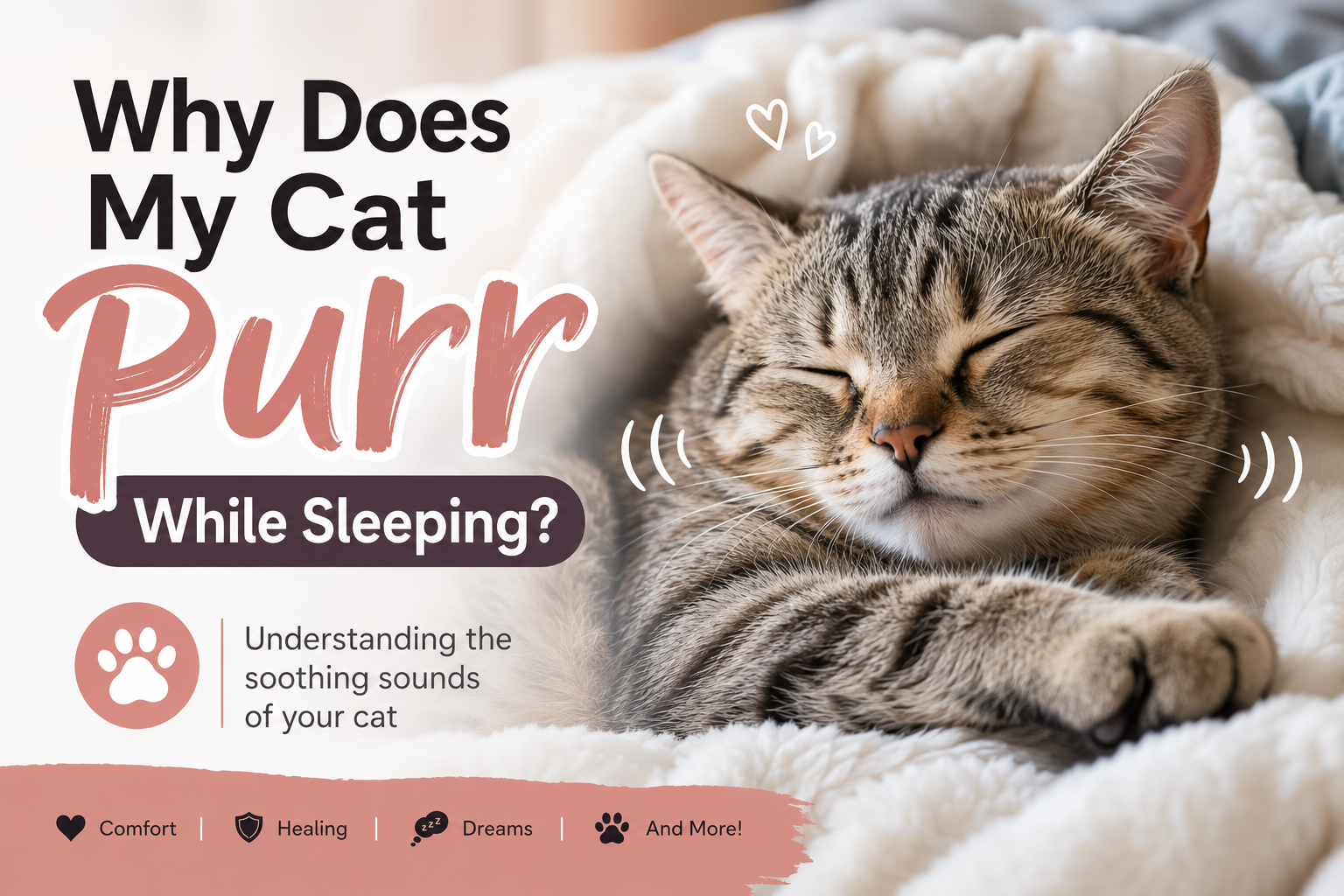
If you've ever curled up beside your cat and heard that soft, rhythmic rumble while they sleep, you've probably wondered what it means. Is your furry friend dreaming? Are they happy? Or could something else be going on?
The good news is that, in most cases, a cat purring while sleeping is completely normal and often a sign that they feel safe, relaxed, and content. However, understanding why cats purr can help you recognize when that soothing sound is simply happiness—and when it might indicate something that deserves a closer look.
What Is Purring, Exactly?
Purring is one of the most recognizable sounds cats make. Scientists still don't fully understand how cats produce it, but they believe the muscles around the vocal cords contract and relax rapidly, creating vibrations that result in the familiar purring sound.
Cats begin purring when they are only a few days old. Kittens use purring to communicate with their mothers, and mother cats often purr back to reassure their babies. Throughout their lives, cats continue to use purring as a form of communication and self-soothing.
Why Do Cats Purr While sleeping?
1. They Feel Safe and Comfortable
One of the most common reasons cats purr while sleeping is that they are deeply relaxed. Cats are naturally cautious animals. In the wild, sleeping makes them vulnerable, so they choose their resting places carefully.
If your cat is sleeping beside you, on your bed, or in a favorite sunny spot while purring, it's usually a sign that they feel secure. Your home has become their safe haven.
Think of it as your cat's version of a contented sigh.
2. They May Be Dreaming
Like humans, cats experience different stages of sleep, including REM (Rapid Eye Movement) sleep, where dreaming occurs. During this phase, you might notice your cat twitching their paws, moving their whiskers, or making small noises.
Some experts believe that cats may continue purring during dreams. Perhaps they're reliving an exciting play session, chasing imaginary mice, or remembering a pleasant cuddle. While we can't know exactly what cats dream about, purring during sleep is generally considered a normal behavior.
3. Purring Helps Cats Relax
Cats don't only purr when they're happy. Purring can also have a calming effect. The vibrations produced during purring may help cats relax and reduce stress.
Many pet owners notice that their cats begin purring when settling down for a nap. Similar to how some people hum softly or listen to relaxing music before sleeping, cats may purr to soothe themselves into deeper rest.
4. Purring May Promote Healing
Researchers have found that the frequency of cat purrs falls between approximately 25 and 150 hertz. Interestingly, these frequencies are associated with promoting tissue repair and bone healing.
Although more studies are needed, some experts believe purring acts as a natural healing mechanism. It may help maintain healthy muscles and bones, especially since cats spend a large portion of their lives sleeping.
This could explain why cats often recover remarkably well from injuries.
5. Kittens Often Purr in Their Sleep
If you have a kitten, hearing them purr while sleeping is especially common. Kittens spend much of their day asleep because they are growing rapidly.
Young cats often purr almost constantly when they feel warm, full, and safe. Their purring behavior starts very early in life and continues into adulthood.
Is It Normal for Older Cats to Purr While Sleeping?
Yes. Senior cats often purr during sleep just as younger cats do. In fact, older cats may spend more time resting and sleeping.
As long as your cat appears comfortable, eats normally, and behaves as usual, purring while sleeping is generally nothing to worry about.
However, changes in purring patterns combined with other symptoms should be monitored closely.
Can Cats Purr When They Are Sick?
Surprisingly, yes.
Cats sometimes purr when they are injured, anxious, frightened, or experiencing pain. Purring may act as a self-comforting mechanism, helping them cope with discomfort.
Because cats are masters at hiding illness, it's important not to assume that purring always means happiness.
Watch for These Warning Signs:
- Loss of appetite.
- Weight loss.
- Lethargy or unusual tiredness.
- Hiding more than usual.
- Difficulty breathing.
- Vomiting or diarrhea.
- Changes in litter box habits.
- Excessive vocalization.
- Limping or signs of pain.
If your cat is purring while sleeping but also shows any of these symptoms, it's best to consult your veterinarian.
Why Does My Cat Purr Loudly While Sleeping?
Some cats are naturally louder purrers than others. Breed, personality, and age can all affect the volume of a cat's purr.
A loud purr while sleeping usually means your cat is extremely relaxed. Certain breeds, such as Ragdolls and Maine Coons, are known for their especially powerful purrs.
As long as your cat seems healthy, a loud purr is usually nothing more than an expression of contentment.
Why Does My Cat Twitch and Purr While Sleeping?
Small twitches during sleep are normal. During REM sleep, cats may:
- Move their paws.
- Flick their tails.
- Wiggle their whiskers.
- Make soft noises.
- Purr continuously.
These movements are often associated with dreaming and are generally harmless.
However, if your cat experiences violent shaking, prolonged seizures, or difficulty waking up, contact your veterinarian immediately.
How Can You Help Your Cat Sleep Comfortably?
Creating a calm and secure environment encourages healthy sleep and happy purring.
Provide a Cozy Bed
Cats love warm, soft places where they feel protected. A comfortable bed or blanket can help them rest peacefully.
Maintain a Routine
Cats appreciate consistency. Feeding, playtime, and bedtime routines help reduce stress and promote better sleep.
Offer Daily Playtime
Interactive toys and play sessions help your cat burn energy and stay mentally stimulated, leading to more restful sleep.
Keep Stress Levels Low
Loud noises, sudden changes, or unfamiliar pets can create anxiety. Providing quiet hiding spots and maintaining a stable environment helps your cat feel secure.
Schedule Regular Veterinary Checkups
Routine health examinations help identify potential issues before they become serious and ensure your cat remains healthy throughout every stage of life.
Final Thoughts
Hearing your cat purr while sleeping is usually one of the sweetest signs that they feel safe, relaxed, and content. Whether they're dreaming, soothing themselves, or simply enjoying a peaceful nap, purring is a natural and fascinating part of feline behavior.
Most of the time, those gentle vibrations are your cat's way of saying, "Everything is okay."
So the next time you hear that soft rumble coming from a sleeping ball of fur beside you, take it as a compliment. Your cat trusts you enough to rest deeply—and that's one of the greatest gifts a feline friend can give.